


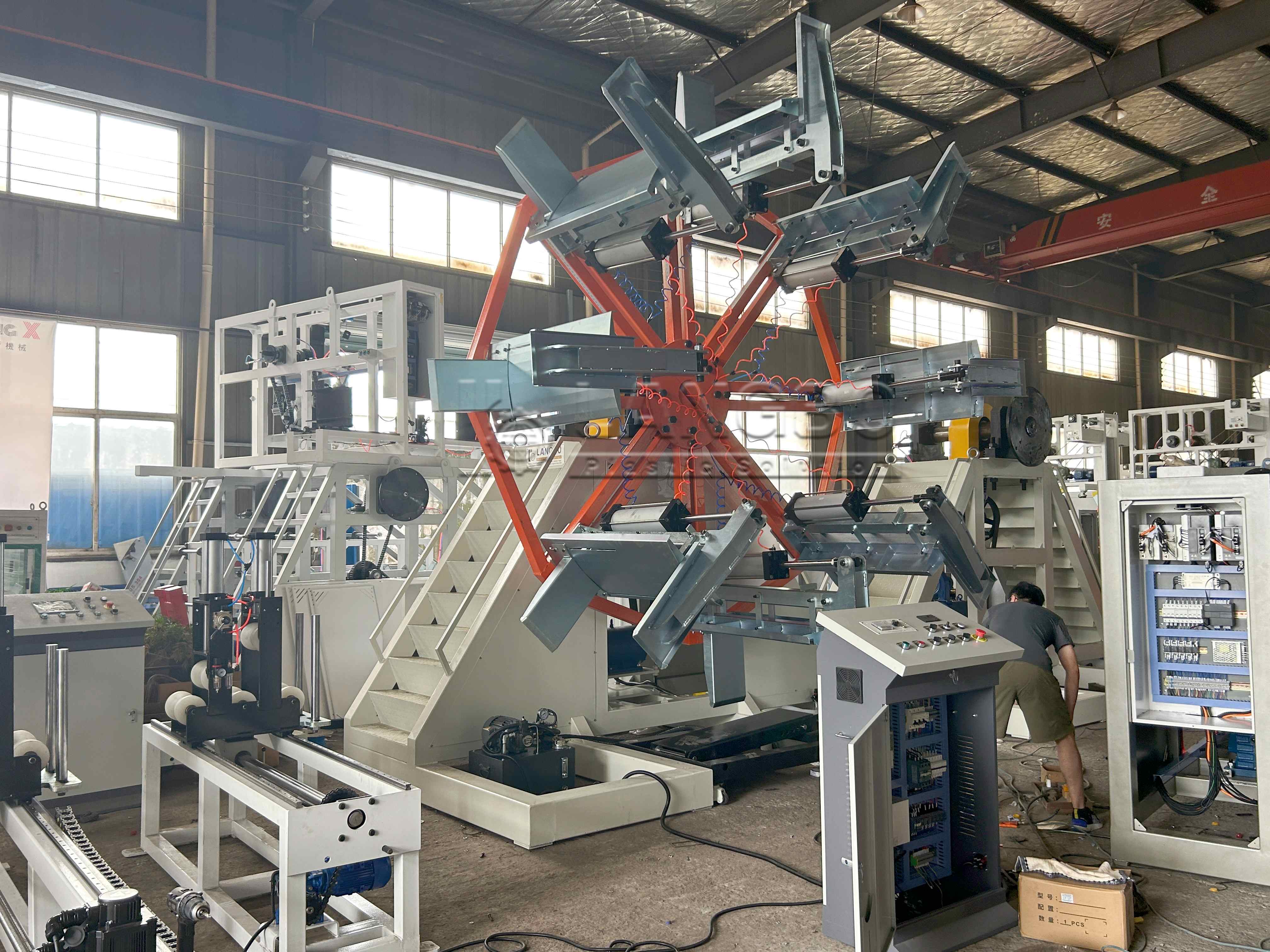
Aplicação da bobina no sistema de produção de tubos contínuos na Tailândia
Publicado em: June 18, 2026
Na Tailândia, a procura de produtos de tubos de plástico continua a crescer em projectos de construção, abastecimento de água e irrigação agrícola.Sistemas de produção contínua de tubosbaseadas em linhas de extrusão de PVC e PE.
No entanto, durante a produção de alta velocidade, um problema comum aparece na fase a jusante:Deformação do tubo durante o enrolamento, o que afeta a qualidade da bobina e a eficiência da embalagem subsequente.
Neste projeto, o cliente relatou instabilidade durante o processo de enrolamento num sistema de produção de tubos contínuos.
Entre as principais questões, destacam-se:
- Deformação do tubo durante o enrolamento devido ao controlo instável da tensão
- Formação irregular da bobina que afecta a empilhamento e armazenagem
- Descoordenação entre a velocidade de extrusão e a velocidade de enrolamento
- Dificuldades em manter a forma da bobina consistente em operação contínua
Estes problemas tiveram um impacto directo no tratamento a jusante e na eficiência do armazém.
A linha de produção é concebida como umsistema de produção contínua de tubos, onde a extrusão, o arrefecimento e o enrolamento devem funcionar em coordenação sincronizada.
Neste sistema:
- A extrusora fornece uma saída contínua de tubos
- O tanque de refrigeração estabiliza as dimensões do tubo
- A unidade de arranque controla a velocidade linear
- A bobina recolhe os tubos acabados em bobinas para embalagem
Qualquer desequilíbrio na fase de enrolamento pode afectar a estabilidade de toda a linha de produção.

Para corrigir a deformação do tubo durante o enrolamento, umSistema automático de bobinasfoi implementado na secção a jusante.
As principais configurações técnicas incluem:
- Sincronização da velocidade com a linha de extrusão por PLC
- Sistema de controlo de tensão ajustável para força de enrolamento estável
- Formação automática de bobinas para manter a forma de enrolamento consistente
- Função coordenada com a unidade de retirada para alimentação estável de tubos
Esta configuração garante que o enrolamento de tubos siga a saída de extrusão sem acumulação de tensão mecânica.
Após o ajuste do sistema e a integração da bobina, a linha de produção alcançou um comportamento de enrolamento mais estável em operação contínua.
As melhorias observadas incluíram:
- Formação de bobinas mais estável durante a produção contínua
- Redução dos problemas de deformação durante o processo de enrolamento
- Melhoria do tratamento das bobinas de tubos acabadas na área de embalagem
- Melhor coordenação entre as fases de extrusão e de enrolamento a jusante
O sistema demonstrou uma estabilidade operacional melhorada em produções de longa duração.
Este caso na Tailândia demonstra que, num sistema de produção contínua de tubos, a deformação dos tubos durante o enrolamento está estreitamente relacionada com o controlo da tensão e a sincronização do sistema.
Ao integrar um sistema de bobinas controlado por PLC e otimizar a coordenação com a linha de extrusão, os fabricantes podem obter uma formação de bobinas mais estável e operações de embalagem mais suaves a jusante.
Para a produção moderna de tubos de plástico, a fase de enrolamento não é apenas uma etapa de embalagem, mas também uma parte fundamental da manutenção da estabilidade geral da produção.

